Please be patient, the video may take a minute to appear.
| Want to sew something for your kids, come and have a look: http://www.etsy.com/shop/ShineKidsCrafts |

| Want to sew something for your kids, come and have a look: http://www.etsy.com/shop/ShineKidsCrafts |
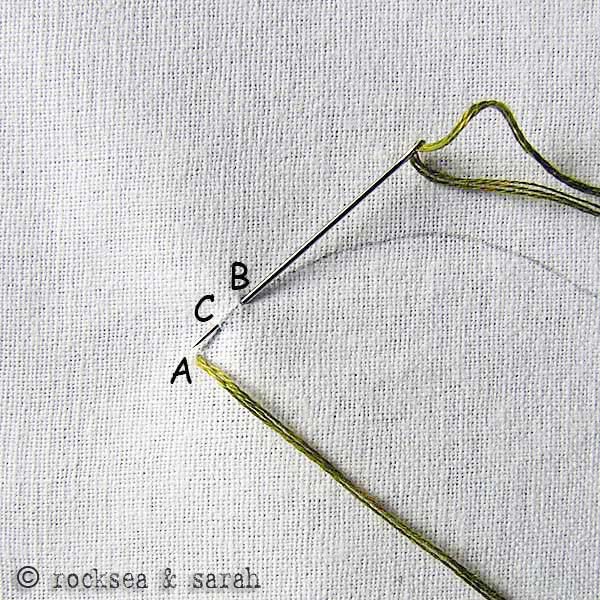 | 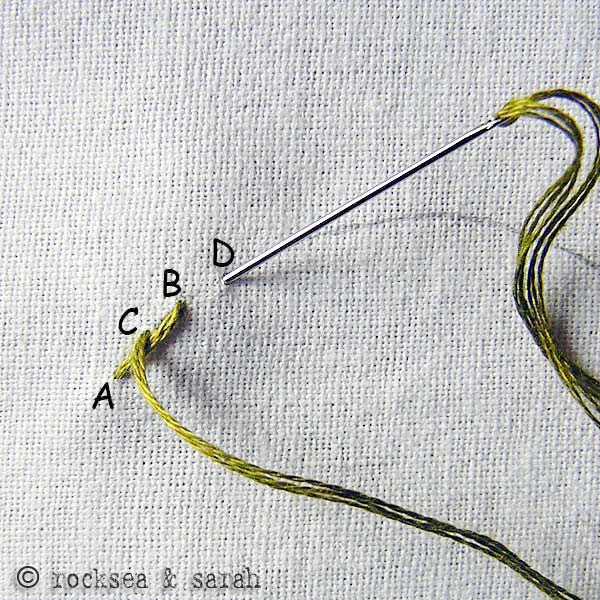 | |
| Fig 1: Bring out the thread through A and take it in through B. Take the needle backwards and bring the thread out through C. Make sure the point C lies over the stitch A-B. | Fig 2: You need to note that the point C lies about half way through A and B. Also note that C lies on top of the stitch A-B. So, all the subsequent stitch points will lie on top their previous stitch. | |
(please be patient, it may take a minute for the video to appear.)
| |||||||
(Want to buy a DIY sewing kit, to sew something for your kids??
This may help: http://www.etsy.com/shop/ShineKidsCrafts?section_id=12537523)
| |||||||
 This stitch is used for joining selvedges together.
To keep the two pieces even, it is better, either to tack or pin them together
first. Insert the needle, from right to left, under the first thread of the
selvedge, and through both edges, and sew from right to left, setting your
stitches not more than three threads apart. The thread must not be drawn too
tightly, so that when the seam is finished and flattened with the thimble, the
selvedges may lie, side by side.
This stitch is used for joining selvedges together.
To keep the two pieces even, it is better, either to tack or pin them together
first. Insert the needle, from right to left, under the first thread of the
selvedge, and through both edges, and sew from right to left, setting your
stitches not more than three threads apart. The thread must not be drawn too
tightly, so that when the seam is finished and flattened with the thimble, the
selvedges may lie, side by side. A A running stitch is created by simply running the needle and thread through the layers of fabric without back stitching.Q How to sew a running stitch.
A Thread the needle and knot the thread. Place needle through the fabric and bring it back up to the top side from the bottom side of the fabric. Repeat.


Still thinking about the Easter party food for your kids? This post may help you! All the food below are easy to make. Most important, the...


